Nitric Oxide Supplements: Citrulline, Arginine and Nitrate
How nitric oxide supplements work, why citrulline beats arginine, nitrate dosing, caffeine limits, and who should avoid these pre-workout ingredients.
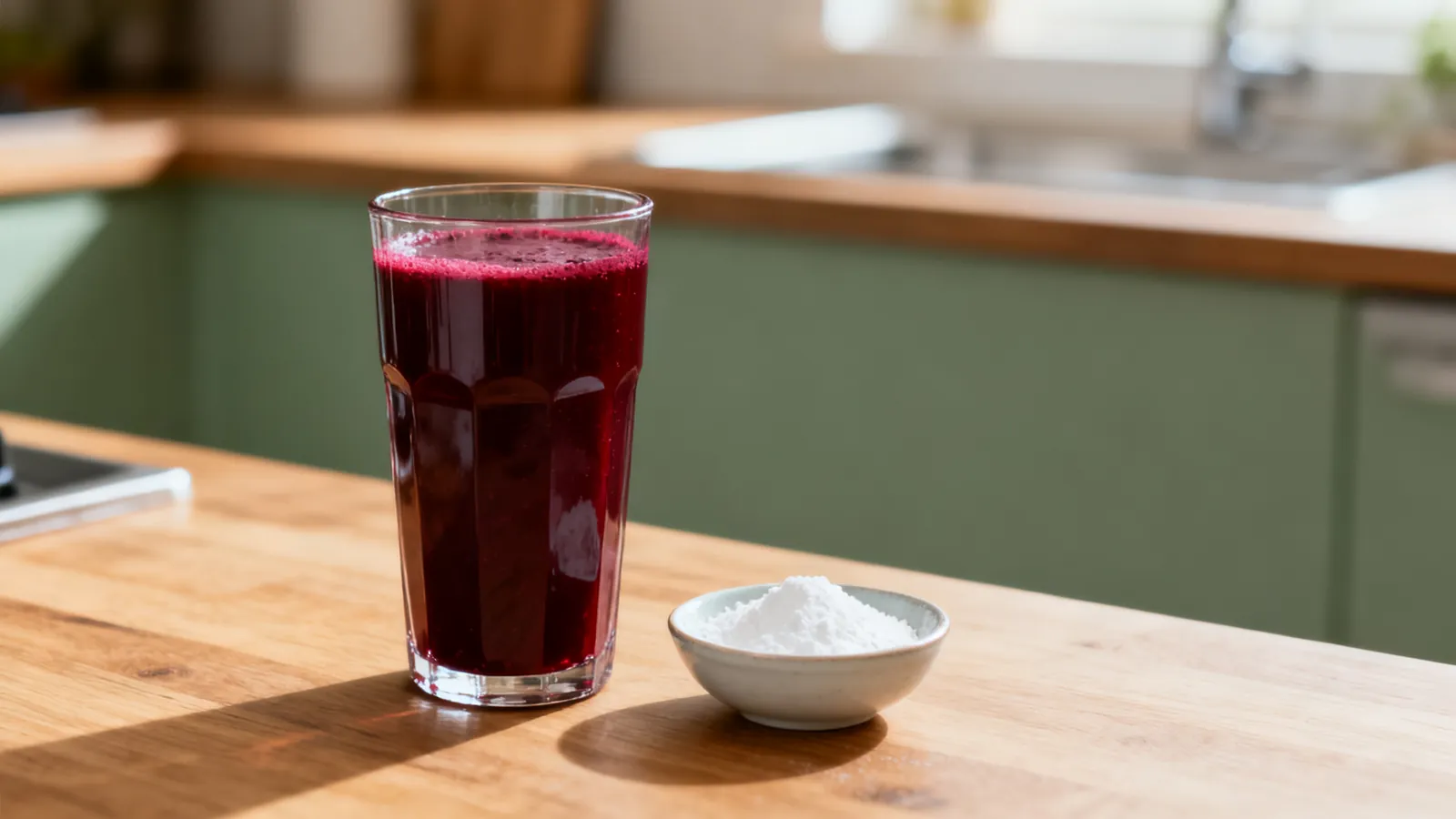
Nitric oxide is a gas the body makes continuously. It is not a supplement in itself, and no pill contains it. What the tubs sold as nitric oxide boosters hold are precursors: amino acids and salts the body can convert into the signalling molecule that relaxes the smooth muscle in blood vessel walls. That relaxation widens the vessel, raises flow, and is the reason these ingredients sit in pre-workout formulas and in products aimed at the gym pump.
The physiology is short enough to state plainly. An enzyme called nitric oxide synthase converts the amino acid L-arginine into nitric oxide inside the cells lining the arteries. Nitric oxide then diffuses into the muscle layer of the vessel wall, where it triggers relaxation and vasodilation. Because the body clears nitric oxide quickly, the effect is local and brief. Supplements attempt to supply the raw material, or to supply nitrate that the body can reduce to nitrite and then to nitric oxide through a separate, oxygen-independent route.
What the research shows, and how strong it is
Three routes are used in supplements: L-citrulline, L-arginine, and dietary nitrate, usually from beetroot or sodium nitrate.
L-citrulline has the most consistent support. Taken orally, it bypasses the liver largely intact and is converted to arginine in the kidney and other tissues, which raises circulating arginine more effectively than arginine itself. Small trials and reviews have looked at blood flow, resistance exercise performance, and perceived exertion, with results that lean positive but are not uniform. The evidence is best described as moderate for flow-related measures and mixed for strength or endurance outcomes.
L-arginine is the direct precursor, but oral arginine absorbs poorly and is heavily broken down by the liver and intestine before it reaches the bloodstream. Doses large enough to move blood arginine appreciably tend to bring gastrointestinal upset. Reviews of arginine for exercise performance have generally found little to no effect at tolerable doses. It remains common on labels because it is cheap and familiar.
Dietary nitrate has a distinct mechanism. Nitrate from beetroot or a nitrate salt is reduced by bacteria on the tongue to nitrite, then converted to nitric oxide in tissue. This pathway works when oxygen is scarce, which is why it has been studied for exercise economy and time to exhaustion more than for the pump. Evidence is moderate for endurance-type outcomes and limited for resistance training.
What the research does not show is a general health benefit from raising nitric oxide for its own sake. Blood pressure studies exist, but they are short and use varied forms and doses. Nothing here is a treatment for any condition.
How much of each ingredient is studied
Amounts below are those commonly used in research or seen on standard labels. They are not instructions to exceed a product’s directions.
L-citrulline and citrulline malate
Studies have commonly used 6 g of L-citrulline, or 6-8 g of citrulline malate, taken 40-60 minutes before training. Citrulline malate is citrulline bound to malic acid; the citrulline content is roughly two-thirds of the stated weight, so 8 g of the malate delivers about 5 g of citrulline. Labels frequently underdose this ingredient, listing 1-2 g, which is below the range studied.
L-arginine
Research has used 3-6 g, often as arginine alpha-ketoglutarate or arginine hydrochloride. Effects on blood flow at these amounts are small and inconsistent, and higher doses are limited by stomach tolerance.
Dietary nitrate
Studies have commonly used 300-600 mg of nitrate, equivalent to roughly 70-140 ml of concentrated beetroot juice or a comparable nitrate salt dose, taken 2-3 hours before exercise. The timing matters because the nitrate-to-nitrite conversion peaks in that window. Antibacterial mouthwash blunts the effect by wiping out the oral bacteria that perform the first step.
Caffeine
Caffeine is not a nitric oxide ingredient, but it dominates pre-workout formulas and interacts with the same goals. Performance research has commonly used 3-6 mg per kg of body weight, taken 30-60 minutes before exercise. A 70 kg person is therefore in the range of 210-420 mg. Many products contain 200-350 mg per scoop, and stacking a pre-workout with coffee or an energy drink pushes total intake higher without the label reflecting it.
Beta-alanine
Beta-alanine is included for buffering muscle acidity, not for nitric oxide. Studies have commonly used 3.2-6.4 g daily, split into smaller doses, over several weeks. The tingling it produces, paraesthesia, is harmless and fades with regular use. It is not a sign the product is working.
Timing, forms and what to look for on a label
Citrulline and arginine are best taken 40-60 minutes before training. Nitrate needs 2-3 hours. Caffeine needs 30-60 minutes. A single scoop cannot optimise all three, which is one reason pre-workout formulas are a compromise.
Form matters more than the marketing name. L-citrulline and citrulline malate are the forms with research behind them; arginine is the weakest link in most formulas. For nitrate, beetroot concentrate and sodium nitrate have both been studied. Proprietary blends that list total milligrams without individual amounts make it impossible to know whether any ingredient reaches a studied dose, and they are the clearest reason to put a tub back on the shelf.
Side effects, interactions and who should avoid these
Citrulline and arginine can cause stomach discomfort, loose stools and, at higher doses, a drop in blood pressure. Nitrate from beetroot can turn urine and stool pink, which is harmless.
Caffeine is the ingredient most likely to cause trouble: jitteriness, palpitations, disrupted sleep, and anxiety in sensitive people. It should be avoided late in the day, and total daily intake from all sources should stay within what an individual tolerates.
Several interactions deserve a doctor’s input. People taking blood pressure medication may see additive lowering of blood pressure from citrulline, arginine or nitrate. Nitrate and drugs for erectile dysfunction, and nitrate and drugs for chest pain, can combine to cause a dangerous fall in blood pressure; this combination should not be used without medical advice. Arginine may interact with blood sugar medication and with drugs that affect potassium.
Anyone with heart disease, low blood pressure, kidney disease, or who is pregnant or breastfeeding should speak to a doctor or pharmacist before using a nitric oxide supplement or a pre-workout. People taking prescription medication of any kind should do the same, because the label will not tell them what matters.
Common mistakes and what these products cannot do
A nitric oxide supplement does not build muscle, burn fat, or improve health on its own. The pump is a temporary increase in blood flow and fluid in the tissue; it is not a measure of muscle growth. More arginine is not better, because absorption limits it. More caffeine is not better, because tolerance and side effects rise faster than any benefit. Beta-alanine tingling is not a sign of potency. And a product labelled as a nitric oxide booster may contain none of the ingredients with meaningful evidence at meaningful doses.
These products also cannot replace training, food, or sleep, and they are not treatments for any medical condition, including erectile dysfunction or high blood pressure. Anyone hoping for those effects should see a clinician.
| Ingredient | Form studied | Amount commonly used | Timing | Who it does not suit |
|---|---|---|---|---|
| L-citrulline | L-citrulline, citrulline malate | 6 g citrulline; 6-8 g malate | 40-60 min pre | Low blood pressure, on BP medication |
| L-arginine | Arginine HCl, AAKG | 3-6 g | 40-60 min pre | Stomach sensitivity, on BP or blood sugar medication |
| Dietary nitrate | Beetroot concentrate, sodium nitrate | 300-600 mg nitrate | 2-3 hours pre | On erectile dysfunction or chest pain medication |
| Caffeine | Anhydrous | 3-6 mg per kg | 30-60 min pre | Heart conditions, anxiety, poor sleep, pregnancy |
| Beta-alanine | Free form | 3.2-6.4 g daily | Split doses, daily | None notable beyond tingling |
Putting it together
For blood flow around training, citrulline is the ingredient with the better evidence and the more useful dose range. Nitrate has support for endurance-type work and needs earlier timing. Arginine is the weakest of the three and the most likely to upset the stomach. Caffeine and beta-alanine are separate tools with separate rules. A label that lists exact amounts, avoids proprietary blends, and keeps caffeine within a range the user tolerates is worth more than one that promises a pump it cannot deliver.
Common questions
What is the best nitric oxide supplement?
There is no single best product, but L-citrulline and citrulline malate have the most consistent evidence for blood flow around training, at roughly 6 g of citrulline or 6-8 g of the malate. Dietary nitrate is better supported for endurance-type outcomes. Arginine is common on labels but absorbs poorly at tolerable doses.
Does citrulline or arginine work better?
Citrulline generally raises blood arginine more effectively than oral arginine, because it passes through the liver largely intact. Arginine is broken down heavily before reaching the bloodstream, so large doses are needed and often cause stomach upset. Most reviews favour citrulline for flow-related measures.
How much caffeine is in a pre-workout, and is it safe?
Many pre-workouts contain 200-350 mg of caffeine per scoop, and performance studies have commonly used 3-6 mg per kg of body weight. Total intake from coffee, energy drinks and supplements adds up. People with heart conditions, anxiety, poor sleep or who are pregnant should speak to a doctor before using caffeine-heavy products.
Can nitric oxide supplements lower blood pressure?
Citrulline, arginine and nitrate can all widen blood vessels, and short studies have looked at blood pressure effects. Anyone taking blood pressure medication should not add these without medical advice, because the effects can combine. They are not a treatment for high blood pressure.
Why do nitric oxide supplements tingle?
The tingling usually comes from beta-alanine, not from the nitric oxide ingredients. It is harmless, fades with regular use, and is not a sign the product is working. Some people find it uncomfortable and prefer formulas without it.
Read next

L-Citrulline vs L-Arginine: Which and How Much
L-citrulline and L-arginine compared: how each works, the amounts studied, citrulline malate versus pure powder, timing, side effects and who should avoid them.

Nitrate-Rich Foods and Nitric Oxide Before Training
How beetroot, rocket and spinach raise nitric oxide, why mouthwash matters, and how dietary nitrate compares with citrulline and arginine pre-workout.
Non-Stim Pre-Workout: Ingredients, Doses, Who It Suits
A non-stim pre-workout relies on citrulline, beta-alanine, nitrates and glycerol. What the research shows, doses studied, and who should skip caffeine.